5 August 2026 · 6 min read · Judgment
The social question, again
People's concerns about AI are political and social before they are technical, and they are rising. Enterprise adoption was not built for that.
What the programs contain
When a large organization decides to adopt AI, the program that follows has a familiar shape. There is a training curriculum, usually organized by role. There are prompting workshops. There is a catalogue of use cases per business unit, a communications plan, and a dashboard that reports completion rates and weekly active users. I have helped build programs like this at 100,000-user scale in regulated industry, and I want to be careful here: none of it is wrong. People need to learn the tools, and the learning has to be organized somehow.
What strikes me, after years inside these programs, is what they leave out. There is no place in the curriculum for the question of whether the technology is good. Not good at drafting emails. Good for the person using it, for their colleagues, and for the society the company operates in. The program assumes that question is settled somewhere, or that it belongs to someone else. As far as I can tell, it belongs to no one.
What the surveys show
The broadest measurement we have comes from Ipsos, whose surveys of AI attitudes the Stanford AI Index has tracked since 2022. The most recent wave interviewed 23,685 adults across 32 countries. The picture it draws is not simple pessimism. The share of people who see AI products and services as more beneficial than harmful has risen, from 52% in 2022 to 55% in 2024. What has risen faster is unease. Half of respondents now say products and services using AI make them nervous, up from 39% in 2022, and trust that companies using AI will protect personal data fell from 50% to 47% in a single year. 1
Public sentiment · 32 countries
Unease is rising faster than optimism
People can see more value in AI and feel more nervous about it at the same time. The two lines are not opposites.
On work, the numbers are direct. Sixty percent of respondents worldwide expect AI to change how they do their job within five years, and 36%, more than one in three, believe it will replace their job outright. 1 In the United States, Pew found 52% of workers worried about the future use of AI at work. 2 PwC's study of nearly 50,000 workers across 48 countries found close to a third of entry-level workers worried to a large or very large extent about what AI means for their future. 3
The next five years · global survey
Change feels likely. Replacement feels plausible.
Each field represents 100 people. The second is not a distant fringe: more than one in three expect their job to disappear.
60%
expect their work to change
60 of every 100 respondents
36%
expect their job to be replaced
36 of every 100 respondents
The regional pattern matters for anyone deploying AI in Europe. Optimism is a majority position in much of Asia and Latin America, with 83% of respondents in China seeing more benefits than drawbacks. In Europe and the Anglosphere it is a minority position: 39% in the United States, 36% in the Netherlands, and comparable levels in France, Germany, and Great Britain, which in 2022 ranked among the most skeptical countries surveyed. European enterprises are rolling out AI into the most reluctant publics in the survey.
One more number helps explain how adoption programs get designed. Among AI experts surveyed by Pew in the United States, 15% say they are more concerned than excited about AI in daily life. Among the American public, it is 51%. 4 The people who build these systems, and the people who plan their rollout, sit on one side of that gap. Almost everyone else in the building sits on the other.
United States · concern about daily life
The people shaping AI see a different future
Experts and the public are not beginning from the same emotional position. That distance follows the technology into every organization.
Source: Pew Research Center, April 2025.
Where the concern surfaces
Employees are not a separate population from the public in these surveys. They are the public. The same person who tells a pollster that AI's risks outweigh its benefits attends the prompting workshop on Tuesday morning.
So the concerns come to work. Some arrive as direct questions: whether the team will shrink, who benefits when the work gets faster, and what happens to the profession itself. Some arrive more quietly, about energy use, where the training data came from, and what this technology is doing to their children. In German-speaking Europe, some arrive formally through works councils, which hold consultation rights when an employer introduces AI. Most, in my experience, are never spoken in an official setting at all.
A program built around capability has nothing designed to engage any of this. So people do what people usually do inside organizations when their real reservations have no venue. They comply. They attend the training, complete the e-learning, and hold back their actual willingness. Reported adoption and actual behavior change end up as very different numbers. I have watched this closely enough, and at enough scale, to consider it a pattern rather than an anecdote.
An older version of this problem
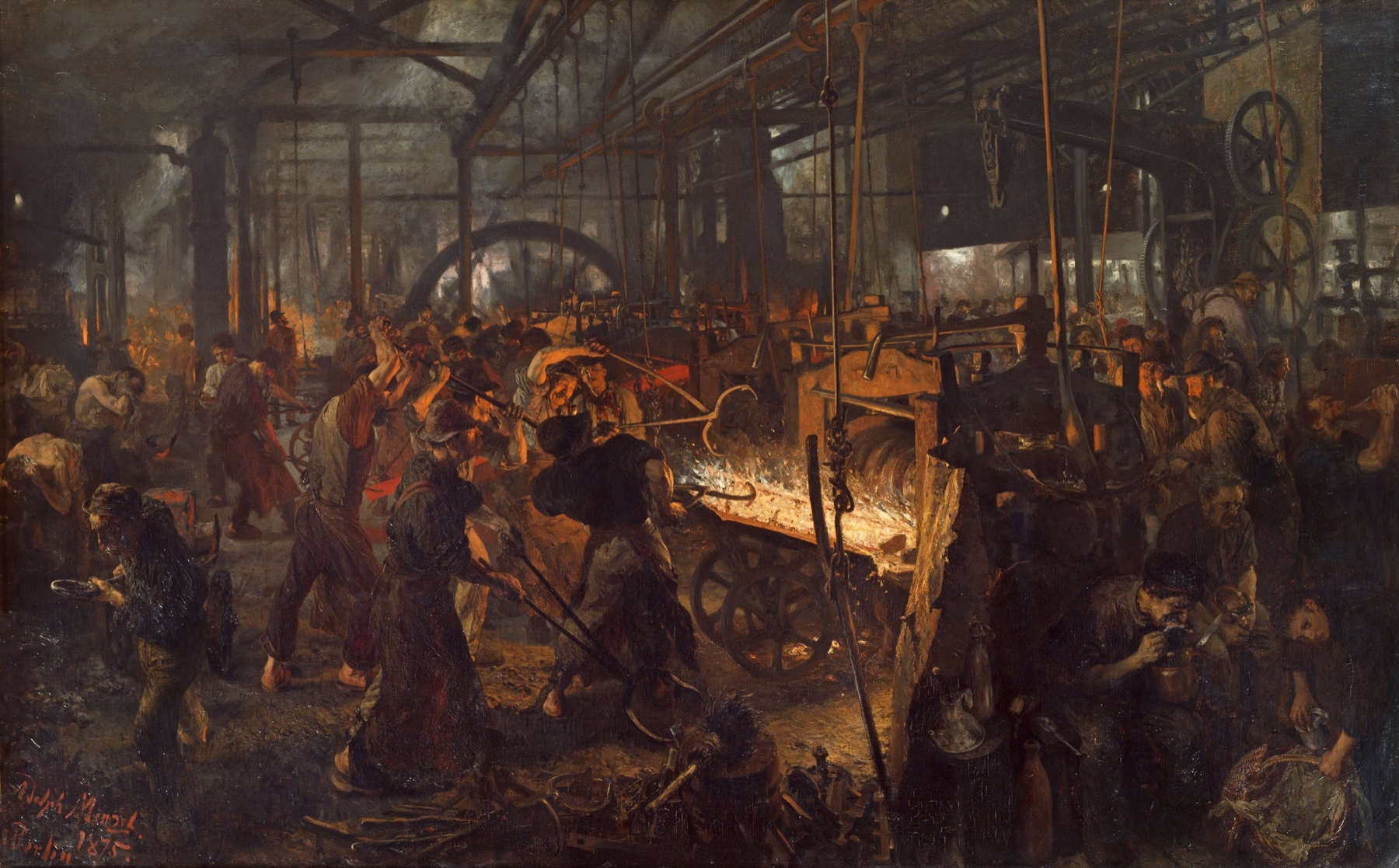
The nineteenth century had a name for the disruption that industrialization brought to workers and communities: the social question. It took companies the better part of a century, and considerable pressure, to accept that some of the answers were theirs to give.
The modern form of that acceptance is corporate social responsibility. It is easy to be cynical about CSR, and often fair. But the underlying settlement is real. Companies now accept that their externalities, the effects they have on the world beyond their transactions, are part of their business. Emissions are accounted for. Supply chains are audited. The first chief sustainability officer of a publicly traded US company was appointed in 2004, at DuPont. By 2011 there were 29 such roles among roughly 7,000 listed companies. In 2020 alone, Fortune 500 companies hired more of them than in the previous three years combined. 5
A company that deploys AI at scale has taken a position on its externalities, whether it says so or not.
AI now generates externalities of its own, positive and negative: on employment, energy, the information people consume, and how the gains are distributed. My argument is that corporate social responsibility, if the phrase means anything, has to widen to include them.
What this asks of adoption
Regulation has started to move, though in a revealing direction. Article 4 of the EU AI Act, applicable since February 2025, obliges organizations deploying AI to ensure a sufficient level of AI literacy among their staff. The national enforcement infrastructure behind it came due in August 2026. 6 When the law reaches for the human side of AI, it reaches for training because training is the instrument everyone already has. The concerns documented above are not a literacy problem, and no curriculum will resolve them.
What would engaging them look like? I am wary of offering a framework, partly because I distrust how quickly frameworks turn into slideware, and partly because the honest answer is that this is early. A few things do seem clear to me. The social and political perception of AI inside a workforce can be measured, and should be, with the same seriousness we give to usage. The questions people carry deserve a venue and a named counterpart, someone whose role is to answer them honestly. And when a company has made a decision with real costs for its people, the decision and the cost should be said out loud, because employees can tell the difference between an answer and a communications plan.
None of this is comfortable. It is still cheaper than the alternative, which is running training programs for people who have privately decided not to come along.
References
- Stanford HAI, Artificial Intelligence Index Report 2025, Chapter 8: Public Opinion. Ipsos surveys 2022–2024; the 2024 wave interviewed 23,685 adults across 32 countries. Report PDF.
- Pew Research Center, “U.S. Workers Are More Worried Than Hopeful About Future AI Use in the Workplace,” February 2025. Survey of 5,273 employed US adults, October 2024. Read the report.
- PwC, Global Workforce Hopes and Fears Survey 2025. 49,843 workers across 48 countries and regions, July–August 2025. Read the report.
- Pew Research Center, “How the U.S. Public and AI Experts View Artificial Intelligence,” April 2025. Read the report.
- Weinreb Group, “The Chief Sustainability Officer 10 Years Later: The Rise of ESG in the C-Suite,” 2021. On Linda Fisher's 2004 appointment at DuPont and CSO hiring trends.
- Regulation (EU) 2024/1689, Article 4, applicable from 2 February 2025; Member State market surveillance authorities due by August 2026. European Commission on AI literacy.
The observations in this note draw on my experience leading enterprise AI adoption programs at 100,000-user scale in regulated industries. No client data is used or referenced.