28 January 2026 · 8 min read · Imagination
Making music with AI: What happens to the creative process?
I made music two ways, through embodied performance and a hybrid AI workflow, to see what changed in feedback, tacit knowledge, and authorship.
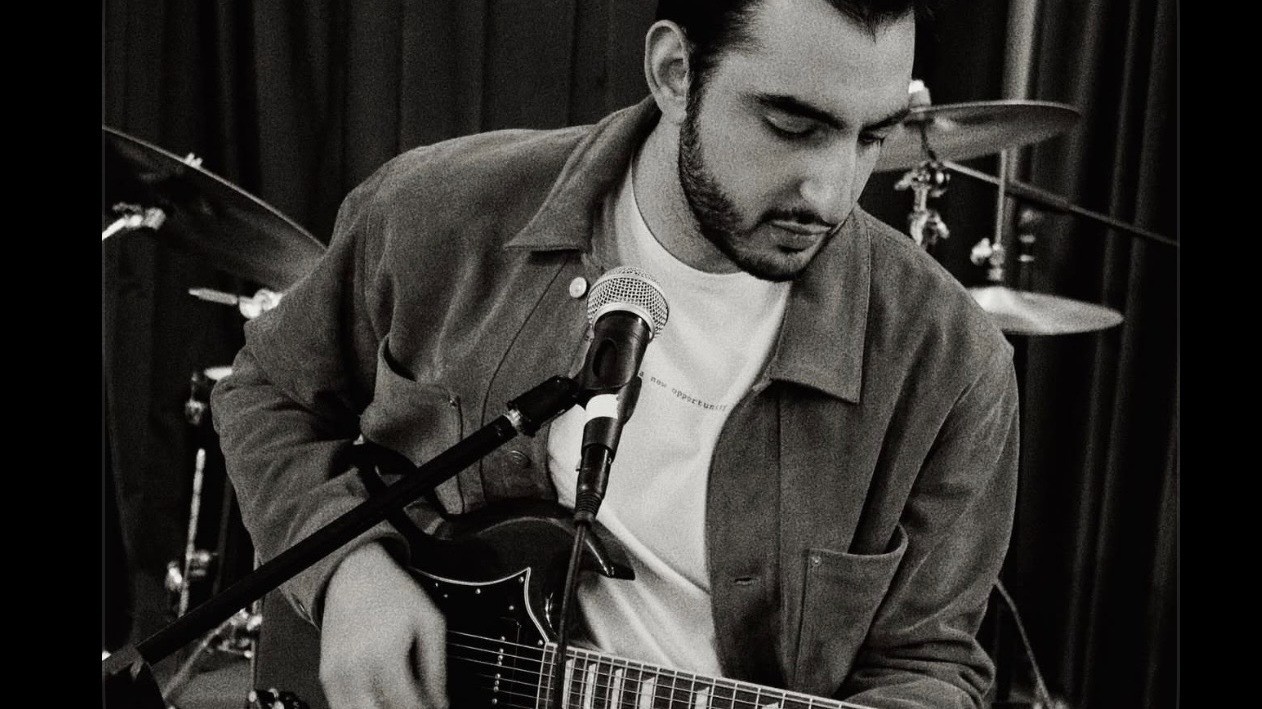
I have recently been thinking a lot about the following question: what actually happens to the creative process when you replace physical action with linguistic description?
Not as a thought experiment. As something I could measure on myself. So I turned my evenings into a lab.
For the LinkedIn colleagues who did not know, I am a hidden rocker and musician in my spare time: guitar, composition, production, the whole pipeline. I know what that process feels like from the inside. The tight feedback loops, the procedural memory kicking in, the way creative insights emerge from the physical act of playing, not just before it.
So I set up an experiment. Create music two ways: traditionally, by playing, recording, and producing it; and with AI assistance, by recording my own performance, uploading it, and asking AI to transform it into a different style based on text prompts. Similar creative intent and constraints. Completely different cognitive pathways.
Then I documented everything: which brain systems were engaged, how the feedback loops changed, what happened to the tacit knowledge I had built over years, where the creative discoveries came from, and how authorship felt.
What I found maps directly to research on procedural and declarative knowledge systems. It is the difference between knowing how to do something, embodied and automatic, and knowing about something, verbal and explicit. This distinction mattered significantly more than I initially realized.
The AI output was often objectively superior in specific dimensions. But something fundamental shifted in the process itself. I think that shift reveals something important about what is actually happening as AI tools enter creative and knowledge work.
This is my documentation of what changed and what it might mean.
The traditional process: thinking through your hands
Here is what making music traditionally actually looks like from the inside.
I access an emotional state, sometimes current, more often deliberately reconstructed from memory. I go deep into it. Then I hear a melody in my head with complete clarity. Not vague humming, but the entire phrase, crystallized.
My fingers move to the frets automatically. I do not think, "7th fret, B string." My hands just know. This is procedural memory, the "muscle memory" system, like riding a bike. Your body knows what to do without conscious instruction.
But here is what is particularly interesting: it is not just executing a pre-formed plan. Often my fingers take me somewhere I did not consciously intend. I explore and play random variations until suddenly I land on a chord voicing and think, "Oh, that is what I was feeling."
The creative insight emerges from the physical act itself.
The physical sensation matters. The vibration under my fingertip. The pressure I apply for intensity. These are not merely execution details. They are how I discover what I am trying to express.
Then comes atmosphere building: switch on reverb, adjust by ear, add distortion, pull back. Real-time manipulation based on immediate feedback. Intuitive and granular.
What is happening neurologically, based on research on creative performance, is a rapid cycle. Your auditory cortex predicts the sound before you play it. Your motor control centers execute without conscious intervention. Action and perception happen almost simultaneously, in less than a tenth of a second. Your body is not just executing commands. Your body is thinking.
One way to describe this is active inference: continuous predict, act, sense, adjust. The process is the creation. There is no clean separation between thinking and doing.
The AI process: a hybrid approach
The AI version turned out to be more complex than I initially planned.
I started with pure text-to-music generation, describing what I wanted entirely through language: "Crunchy guitars with spacey ambient pads. Chris Rea-style vocal delivery. Melancholic, but with forward momentum." The actual prompt was longer and more detailed.
But I discovered that reaching the specific style and emotional nuance I wanted was extraordinarily difficult through text prompts alone. The outputs were competent but generic. They lacked the musical originality and particular emotional signature I was seeking.
So I adjusted the methodology. I recorded my own performance first, playing guitar, singing, and capturing my embodied interpretation of the emotion. Then I uploaded this recording to the AI and asked it to transform the piece into a specific style, adjusting production elements while maintaining certain parameters of my original performance, set to approximately 80% matching.
This became a hybrid process: embodied creation as the foundation, then AI transformation as an additional layer.
The emotional intent was the same as in the traditional version. But the pathway was fundamentally different. I created the embodied artifact, then described how I wanted it transformed rather than manipulating that transformation directly myself.
I submit the parameters. I wait 30 to 60 seconds. There is no real-time feedback loop during generation. No sensorimotor integration while the AI processes. Agency is suspended during transformation.
The output arrives.
And here is where it became complicated: it was genuinely impressive. It hit aspects of my musical taste in ways I did not anticipate. The production quality exceeded what I could achieve manually. Some elements preserved exactly what I had performed. Others transformed it in ways that felt sophisticated.
I experienced a distinct emotional dissonance, a simultaneous appreciation for the quality and uncertainty about authorship. The output was objectively superior in specific technical dimensions: mix clarity, production polish, and sonic sophistication.
But the authorship question became genuinely ambiguous. I had created the underlying performance. The AI had transformed it. Where did my contribution end and the AI's begin? The sense that I made this felt unclear in a way that was cognitively disorienting.
Three key differences
1. The compression problem: partially solved, partially remaining
Tacit knowledge is philosopher Michael Polanyi's term for knowledge you possess but cannot easily articulate. "We know more than we can tell." This is why expert surgeons cannot fully teach technique through verbal instruction alone.
By uploading my own recording, I partially bypassed the compression problem. My embodied performance, with all its micro-timing, pressure variations, and phrasing choices, was present as actual audio data rather than compressed into a text description.
But the compression problem remained in the transformation instructions: "Transform this into this style, add these atmospheric elements, adjust these production parameters." I still had to translate my aesthetic vision for the final output into language.
Despite this remaining compression, the AI produced results that were objectively superior in certain dimensions. Not just faster, but genuinely better by measurable technical standards.
Quality increased significantly in some aspects. The feeling of authorship decreased proportionally.
This creates an interesting tension. The hybrid approach preserves more embodied input than pure text-to-music, but introduces a new ambiguity about where human contribution ends and AI transformation begins.
2. The feedback loop transformation
The traditional process involves continuous real-time feedback: play a note → hear it immediately → adjust instantly → discover something new. Feedback happens in less than 0.1 seconds. It is continuous iteration where discovery emerges from the process itself.
The hybrid AI process changes this temporal structure entirely.
First, you have the traditional feedback loop while creating your initial recording. That part remains unchanged. You are still in the predict, act, sense, adjust cycle.
Then comes a fundamentally different phase: describe the transformation you want → wait → evaluate the complete transformed output → regenerate with adjusted parameters or accept it. There is a 30-to-60-second latency with no intermediate feedback. You are making discrete jumps rather than continuous adjustments. You specify the transformation, then see what emerges.
Research on musical improvisation suggests that real-time feedback enables flow states where self-monitoring decreases and creative risk-taking increases. The hybrid approach preserves this for the initial creation but eliminates it for the transformation phase.
The question becomes: which phase constitutes the "real" creative work? The embodied performance or the aesthetic transformation decisions?
3. Where uniqueness lives, and where it gets complicated
My traditionally created music contains signature elements that are difficult to replicate: specific fingerpicking patterns developed over years, vocal timbre and phrasing habits, and the particular way my hand naturally falls on the fretboard. These emerged from my body, my history, and my physical constraints. They are emergent properties of me as a physical system.
The hybrid AI approach preserves some of these elements because they are in the uploaded recording, but it transforms them. My performance is the foundation, filtered through the AI's interpretation of my transformation instructions.
Uniqueness no longer resides purely in execution, how I physically perform, or purely in vision, what I imagine and articulate. It is distributed across my embodied performance, my aesthetic transformation decisions, and the AI's interpretation of those decisions.
This distribution of authorship is what creates the cognitive dissonance. Traditional creation has clear authorship: I did all of it. Hybrid AI creation has ambiguous authorship. We collaborated, but the boundaries are unclear.
The critical question is this: in a world where creation becomes collaborative with AI, how do we understand authorship? And does that ambiguity fundamentally change the experience of creating?
Why this matters beyond music
I chose music deliberately. It combines technical skill, tacit knowledge, embodied patterns, intuitive choices, and emotional investment. This combination exists in most high-value knowledge work.
The pattern I observed maps directly to other domains:
- In software development, you might write initial code, with all the procedural patterns involved in typing and structuring it, then ask AI to refactor or optimize it.
- In design, you might sketch initial concepts, then have AI generate variations or add polish.
- In strategic thinking, you might articulate your initial analysis, then have AI expand or restructure it.
- In writing, you might draft your ideas, then have AI adjust the tone or style.
The hybrid approach is becoming increasingly common: create something yourself, then have AI transform it. This preserves some embodied input while accelerating certain transformations.
But it also introduces the authorship ambiguity I experienced. When your work becomes the foundation and AI becomes the transformer, where does your contribution end and the AI's begin?
Testable hypothesis: The cognitive and emotional experience of AI-assisted work correlates with how much of your expertise remains embodied in the process versus how much is translated into transformation instructions.
Not because people are irrational. Because something fundamental about creative cognition is changing when we introduce this hybrid model.
You are not losing the skill entirely. But you are outsourcing a significant portion of the process, and that changes how it feels to create.
Listen and evaluate
Theory requires empirical validation. Below are two tracks from this experiment: one created entirely through traditional methods, and one created through the hybrid AI approach described above.
I am not revealing which is which yet.
Listen to both. Note your subjective response. Can you identify which is which? Does knowing the creation method, once revealed, change your evaluation of quality, authenticity, or artistic merit?
I will reveal which is which in a follow-up after people have had an opportunity to listen.